for heads of engineering

Connect your product without betting production on it.

Your product was built to be used by humans, not reached programmatically. Pontil generates the connectivity layer — to customers, external tools, and agents — from the codebase you already have, and keeps it current as you ship.

The problem

The wall your API didn't cover

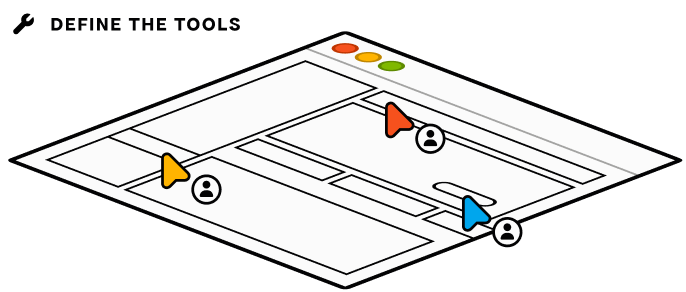
Your product was built for the UI. Rich interfaces, deep workflows, permission checks in the controller layer. The moment something needs to reach it programmatically — a customer's integration, a partner's system, an external tool your users depend on, an agent acting on their behalf — it hits a wall.

The API kept up with some of it — the rest, it didn't. A rewrite is the right answer leadership won't fund. Bespoke connectors compound maintenance linearly. You know all of this. The question is what to do about it.
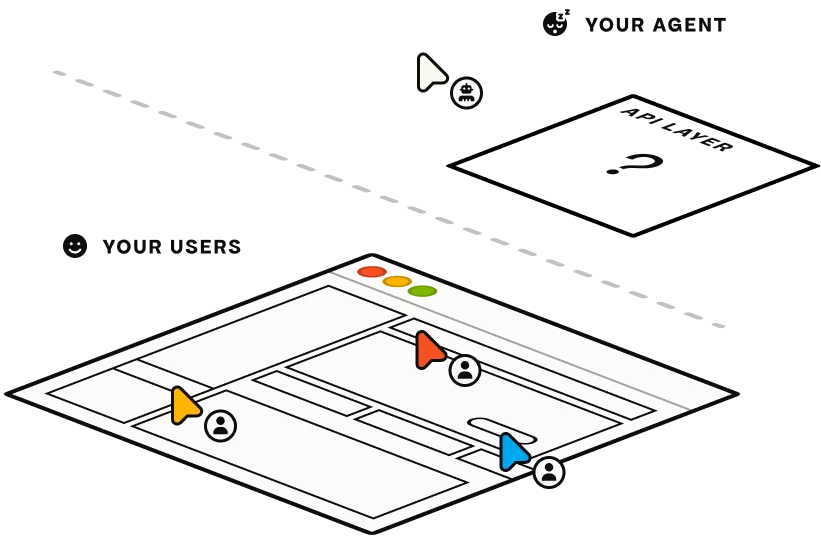
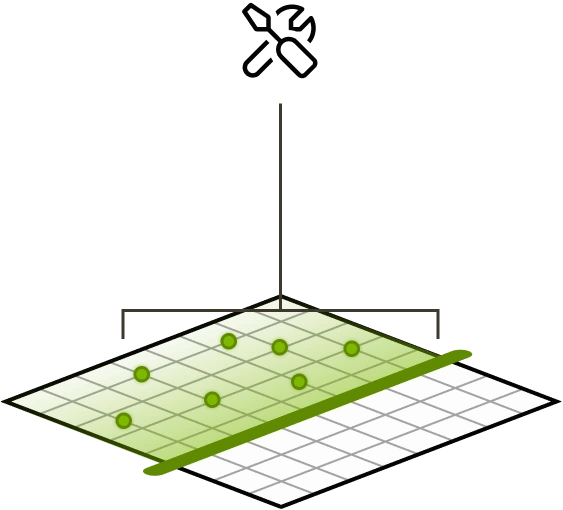
Diagram showing how Pontil connects AI agents to existing platform APIs
pontil

Three directions, one engine

Pontil is one platform with three modules, all running on the same generation and maintenance engine. The mechanism below is the same regardless of which direction you start with.

HOW PONTIL WORKS

Three steps, all operating on systems you already run.

01
Diagram of Pontil scanning a codebase to discover existing APIs

Generation

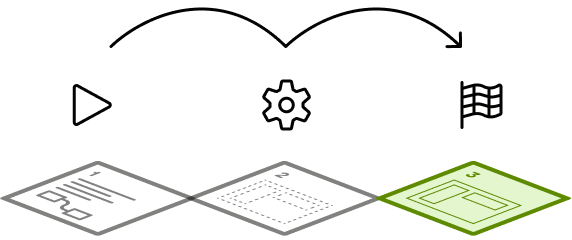
Pontil scans your codebase and produces structured action definitions from the endpoints that already exist in it — including endpoints your UI calls but your public API never exposed. It works from the code, so the starting point is what your product can actually do, not what a published spec happens to document.

02

Composition and review

Those actions are composed into higher-level tools that map to real tasks, with your engineers reviewing and approving what gets exposed.

03

Runtime

The runtime executes each call deterministically, and handles failure, rate limiting, observability, and auth lifecycle. Definitions are fetched at call time, so callers see the current version without a redeploy.

Every call runs as the authenticated user — never a shared service account — so permissions, data visibility, and audit trails reflect the real identity.

build vs buy

Drift is the part everyone underestimates

A connector that works today breaks the moment an endpoint changes shape. Connectors that scrape a UI or reverse-engineer a third-party API break silently — there's no contract to test against and no way for the customer to catch the drift. Because Pontil generates from your codebase, your existing pipeline catches the breaking change before it reaches production. That's the difference between operating on your side of the system and reverse-engineering someone else's.

With Pontil, your code is the contract: your CI can trigger regeneration when it changes, and your test harness and observability point at the generated connectors like any other part of your system.

security

We don't cross the boundary. We become part of it.

Pontil runs inside the infrastructure you already operate. Your code and data stay within your trust boundary. You can self-host. Audit trails are written where your security team already reads them.

Diagram of Pontil's security architecture and data boundary

Want to learn more about our security and the trust boundary?

Frequently asked questions

How much of my team's time does this take?
What happens when we change our APIs?
Is Pontil reading our source code? Where does that go?
Who supports the generated connectivity in production?
Can we self-host this?
How do you handle auth, rate limiting, and observability?